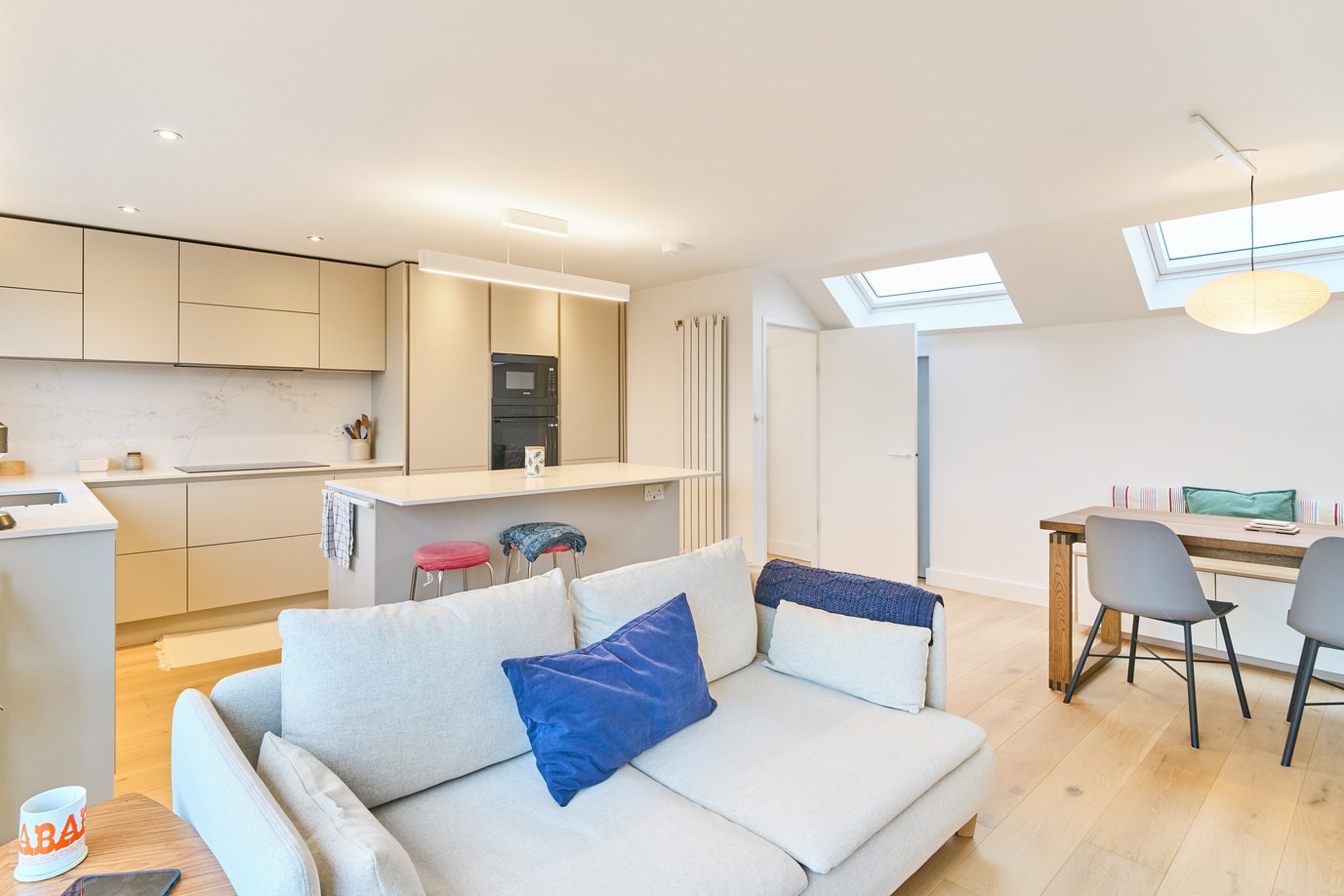
With London property prices continuing to climb and the cost of living squeezing household budgets, many homeowners are looking for creative ways to make their homes work harder. One of the smartest moves you can make? Converting your unused loft space into a self-contained Airbnb suite. Not only does it add significant value to your property, but it can also generate a substantial monthly income – often enough to cover a large portion of your mortgage repayments.
In this guide, we explore why a loft conversion is ideally suited to short-term letting, what your guests will expect to find waiting for them, and the essential compliance steps you need to take before you list your first night on Airbnb.
Is a Loft Conversion Good for Airbnb
Not all rooms in a house lend themselves naturally to short-term letting. Ground-floor rooms can feel insecure. Spare bedrooms tucked alongside the family bathroom offer guests little privacy. A loft conversion, on the other hand, solves almost every one of these pain points from the outset.
Privacy is arguably the single most important factor for Airbnb guests – and for the hosts sharing their home. A loft sits at the very top of the property, physically separated from the main living areas. With a well-designed conversion, you can create a genuinely self-contained space that feels more like a boutique studio apartment than a spare room. Guests get their own entrance from the landing, their own en-suite bathroom, and their own sense of independence. You get your home back.
The income potential is compelling too. London Airbnb listings for private rooms or studio suites regularly command between £80 and £180 per night depending on location, quality of finish, and time of year. Even at a conservative occupancy rate of 60%, a well-presented loft room could bring in £1,400 to £3,000 per month – all from a space that was previously gathering dust.
From a design perspective, loft conversions naturally lend themselves to the kind of characterful, Instagram-worthy interiors that attract Airbnb bookings. Exposed beams, Velux skylights flooding the room with natural light, and sloping ceilings all create a distinctive aesthetic that guests actively seek out. Simply Loft’s design team can help you lean into these architectural features to create a space that stands out in a crowded marketplace.
The Essentials Every Airbnb Guest Expects
Getting great reviews on Airbnb – the currency that drives bookings – comes down to meeting and exceeding guest expectations. Here is what every guest will be looking for:
A Comfortable, Quality Bed – Non-negotiable. Invest in a good-quality mattress, crisp white bedding, and at least four pillows. A poor night’s sleep is the fastest route to a bad review.
A Private En-Suite Bathroom – Sharing a bathroom with the host family is one of the most common complaints on Airbnb. A loft with an integrated en-suite immediately elevates your listing into a higher tier.
Reliable, Fast Wi-Fi – Slow or unreliable Wi-Fi is as much of a dealbreaker as a broken boiler. Run a dedicated access point into the loft and display the details prominently. Many guests are remote workers who filter specifically for fast connections.
A Kettle, Mini-Fridge, and Basic Kitchen Facilities – A compact, stocked tea bar removes the awkwardness of guests feeling they need to ask permission to make a drink and brings that extra bit of self-contained homeliness.
Adequate Heating and Ventilation – Loft spaces can be prone to temperature extremes. Proper insulation, a thermostatically controlled heater, and openable Velux windows are all essential.
A Smart TV or Streaming Access – A wall-mounted smart TV is a relatively small investment that guests consistently mention positively in reviews.
A Thoughtful Welcome Pack – A printed or digital guide covering check-in times, Wi-Fi details and house rules sets expectations clearly and reduces back-and-forth messages. On top of this it is always great to have local transport information (Tub stations, bus routes and tube-map) and consider this like, local pub & restaurant recommendations and details of things like parks, points of historical interest or parkruns in the area.
Airbnb Compliance: The Steps You Must Take
Before you welcome your first guest, there is important groundwork to complete. Failing to follow the correct steps can result in fines, insurance disputes, or even being required to stop letting entirely.
- Check Your Mortgage and Freeholder Agreement – If you have a mortgage, inform your lender before letting any part of your property. Many standard residential mortgages do not permit short-term letting without prior consent. Leasehold owners should also review their lease, as many prohibit subletting without written freeholder permission.
- Inform Your Home Insurer – Standard home insurance does not cover short-term letting. You will need a specialist host or landlord policy. Airbnb’s AirCover protection is supplementary – it should not be treated as a replacement for proper insurance.
- Understand the 90-Night Rule – The Deregulation Act 2015 allows London homeowners to let short-term for up to 90 nights per calendar year without planning permission. Exceeding this without consent is a breach of planning law. Airbnb automatically enforces this cap on London listings.
- Register with Your Local Council if Required – Several London boroughs have introduced or are piloting mandatory short-term let registration schemes. Check the requirements for your specific borough and stay up to date as this area of regulation continues to evolve.
- Fire Safety Compliance – You must install working smoke alarms on every floor, carbon monoxide detectors where required, and ensure a clear, safe escape route from the loft. Simply Loft conversions are designed with Building Regulations fire safety requirements built in from the outset.
- Gas Safety and Electrical Certificates – Annual Gas Safe certificates are required for any gas appliances. All electrical installations should be certified by a qualified electrician. These are legal requirements when letting to paying guests.
- Consider Your Tax Position – Airbnb income is taxable, but the UK government’s Rent a Room Scheme allows you to earn up to £7,500 per year tax-free from letting a furnished room in your own home. Income above this threshold must be declared via self-assessment. Speak to an accountant to ensure you are making the most of the available allowances.
Start With the Right Loft Conversion
The foundation of a successful Airbnb loft is a well-designed and well-built conversion. The quality of the space – the layout, the natural light, the insulation, the finish – will directly determine the nightly rate you can charge and the reviews you receive.
At Simply Loft, we specialise in designing and building loft conversions across London that maximise every square metre of available space. Whether you are considering a Velux conversion or a more substantial dormer or hip-to-gable extension, our team will guide you through planning, Building Regulations approval, and construction – delivering a finished space that is not just beautiful, but built to work.
The best Airbnb hosts are not necessarily those with the largest properties. They are the ones who have invested in creating a space that feels special, private, and thoughtfully equipped. A loft conversion gives you the canvas – Simply Loft gives you the craftsmanship to make it a reality.
Contact the Simply Loft team today for a free consultation and no-obligation quote.